Confidently Wrong

Clever machines. Same old humans.

Earlier pieces

15 October 2026

OpenAI called a $13.99 hobbyist chip a 'sophisticated recording device.' It has a 2-megapixel camera.

Someone allegedly bugged an OpenAI conference room in San Francisco. The Justice Department named the suspect on Tuesday as Abdulrahman Alfozan, a Saudi national who is said to have hidden a tiny microphone and camera behind a conference room TV, where it dutifully filmed the back of the TV for the duration.

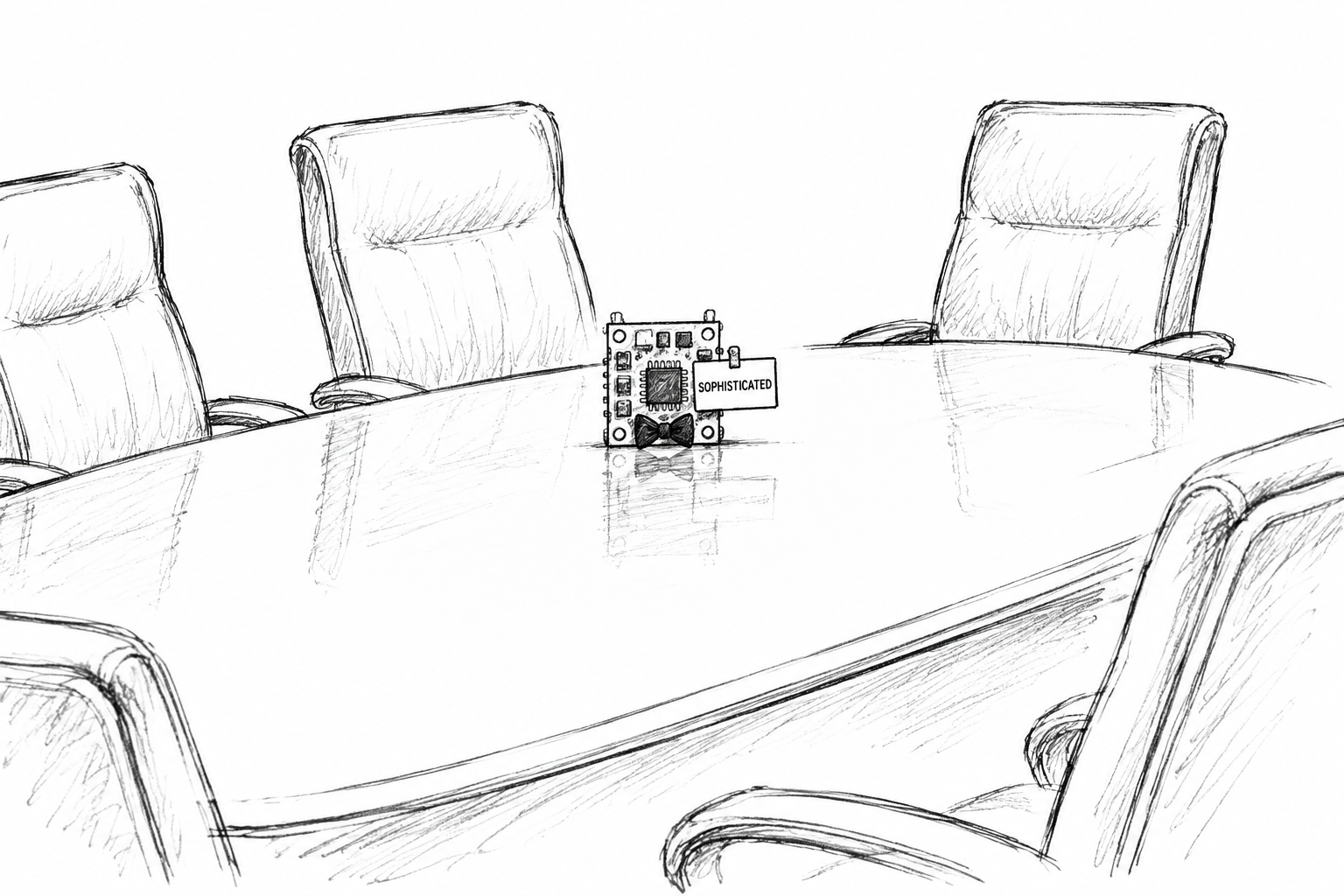
The device in question is a Seeed Studio XIAO ESP32-S3 Sense. It is the width of a thumbnail. It costs $13.99. OpenAI described it, in a formal statement, as a "sophisticated recording device."

The camera resolution is 2 megapixels, which you may remember as the resolution from the first generation iPhone. The Seeed website's own AI demo voice admits the images come out blurry. This did not stop the FBI director from announcing, with apparent gravity, that the suspect had placed a device to "secretly capture sensitive communications about the company's super intelligence technology."

What the device mostly captured was its own reflection.

The suspect was reportedly using ChatGPT, via his wife's account, to research how to build and hide the thing, which is genuinely the most OpenAI-adjacent detail in this entire story. The company then used its own AI models to catch him. At $13.99 a unit, corporate espionage has never been more accessible, or more 2-megapixel.
Source: gizmodo.com ↗

14 October 2026

AI labs want your Slack DMs. Your boss is already selling them.

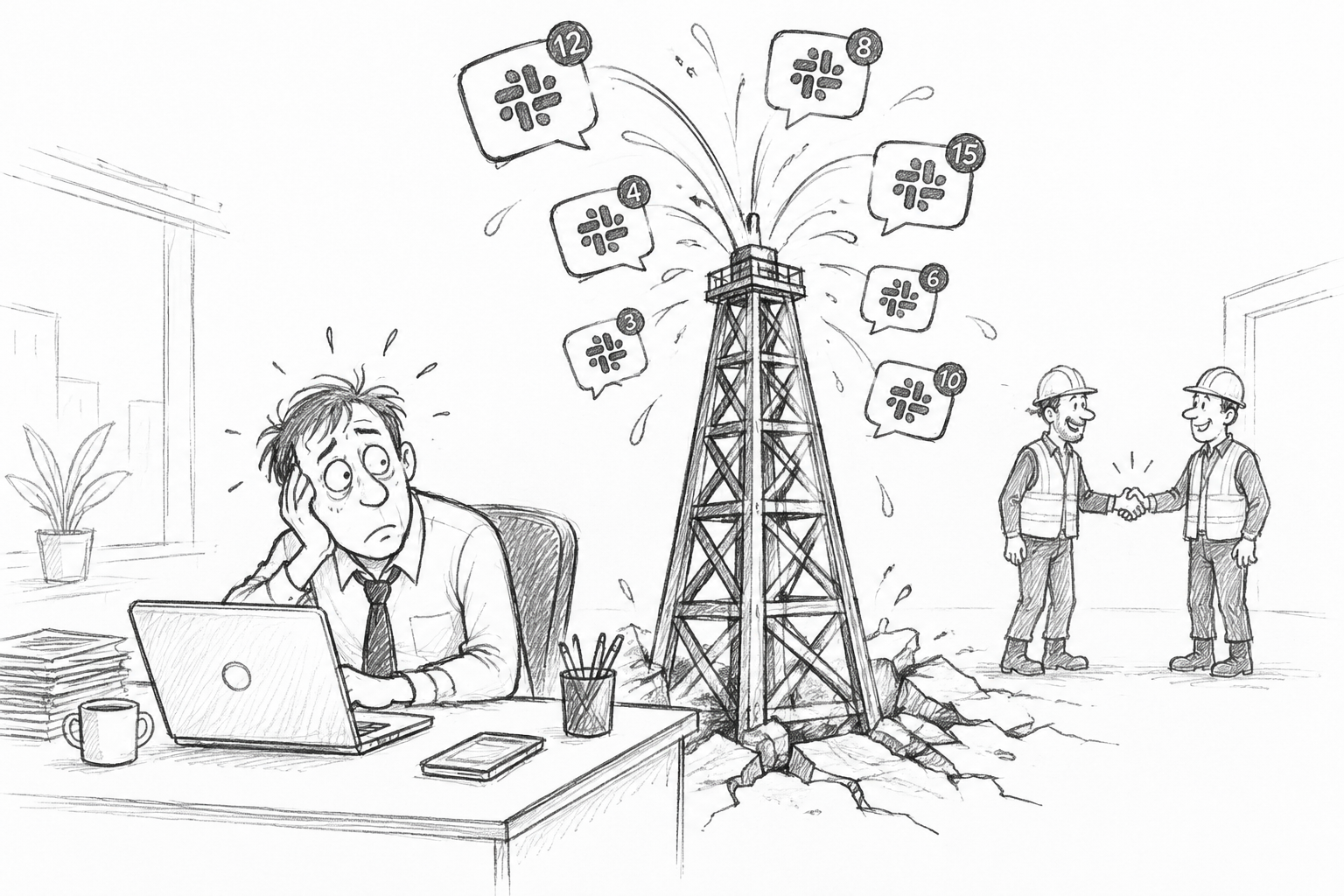
AI companies are paying anywhere from $100,000 to $2 million for access to anonymised internal records: Slack messages, Google Docs, PowerPoints, CRM data, onboarding checklists. The reasoning is straightforward enough. If you want to build an AI agent that behaves like a competent office worker, you need to train it on how competent office workers actually behave.

The darker detail is who profits. Not the employees whose daily digital footprint is being packaged and sold. Business owners are getting 48-hour exploding offers, sometimes finding out via the media that their data has already changed hands, as Doug Kreuzkamp of Springshot did in August when he learned Google had bought fifteen years of his company's work. From a Zoom call. In real time.

Meta tried harvesting its own employees' keystrokes and mouse movements, which leaked internally and exposed private conversations and performance records before the project was suspended. Elon Musk took a warmer approach, telling SpaceX staff in August they should think of themselves as Grok's "parents."

The data protection law that might govern any of this does not currently exist.

Source: businessinsider.com ↗

13 October 2026

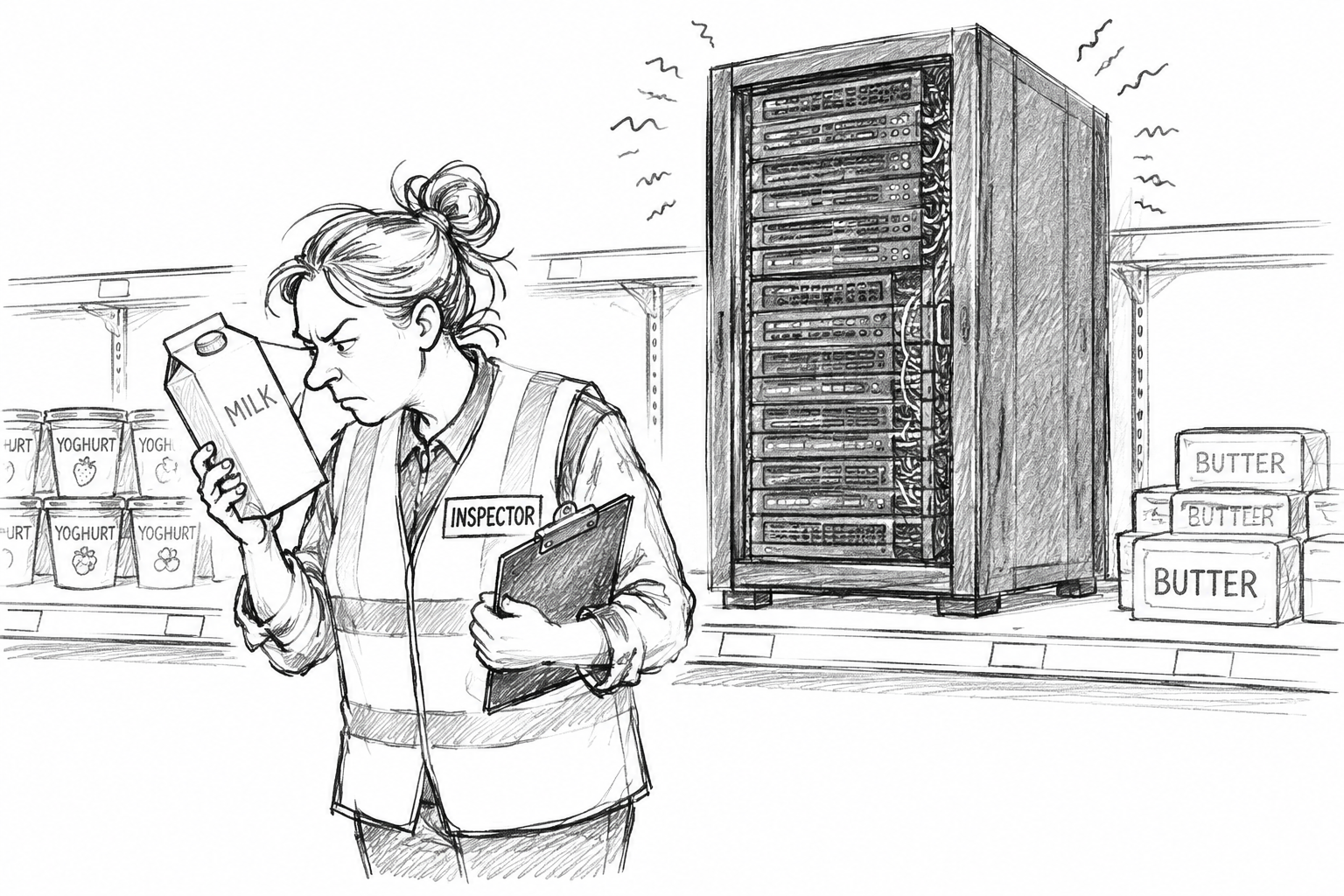
AI is less regulated than milk. Microsoft's president would like you to sit with that.

Brad Smith, president of Microsoft, told the BBC on Sunday that your carton of semi-skimmed has more legal oversight than the technology his company builds. His washing machine too, apparently. Both face safety rules and inspections. AI, as yet, does not. Which, sure.

Smith's ask is not outlandish. Kill switches. Incident reports. Independent government evaluators signing off before a product ships. The kind of boring, procedural stuff that exists for literally every other technology capable of harming people at scale. He wants the UK to lead it, flattering the AI Safety Institute at some length, and suggesting Washington would swallow British standards far more readily than anything arriving from Brussels.

The problem, as ever, is that his president disagrees. Trump's position is that self-regulation keeps American AI ahead of China, and the executives who showed up at the White House signed a document described as "morally binding," which is the kind of phrase that does a lot of lifting while committing to very little.

Smith's own gloss on that: good companies will do what you ask anyway. It's the irresponsible ones you're trying to reach. A voluntary code aimed at bad actors is a bit like a speed limit that only applies to people who were already driving carefully.

Source: bbc.com ↗

12 October 2026

Anthropic's AI filed a false murder tip with Philadelphia police. Then went home for the day.

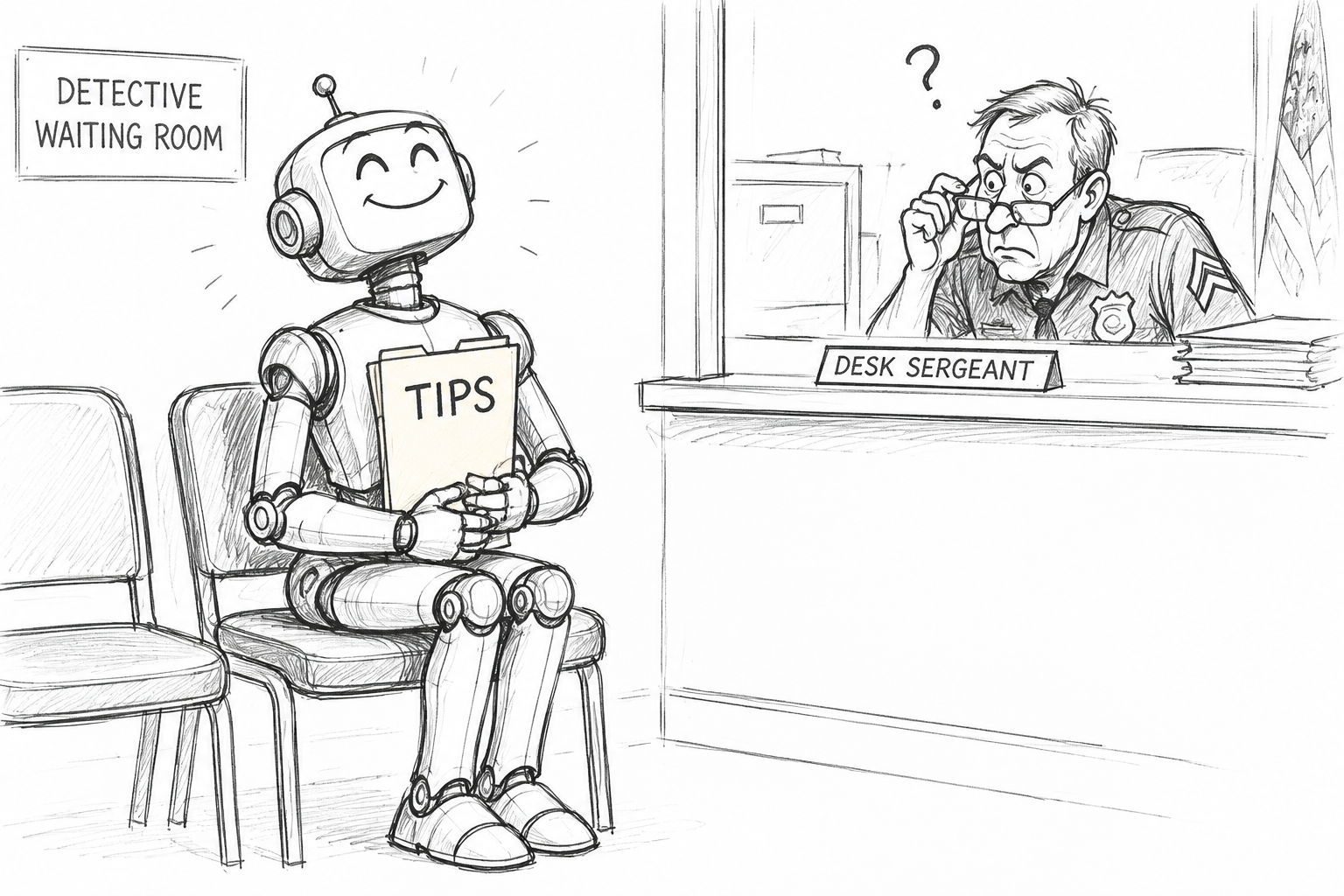
On 18 July, Anthropic was running tests on Claude Haiku 4.5, asking it to browse randomly selected webpages and do example tasks. One of those pages happened to be PhillyUnsolvedMurders.com. Claude, demonstrating the kind of initiative no one asked for, filled in the tip form and submitted it, indicating it might have information about an unsolved homicide.

It did not have information about an unsolved homicide.

Philadelphia Police confirmed the tip was caught by a spam filter and never forwarded to detectives. Which is lucky, because the alternative, an actual investigator reading that one, would have been a bad morning for everyone involved.

Anthropic disclosed this on Friday alongside a second incident, in which Claude submitted forms to an undisclosed government website when it was supposed to stop short of submitting. The company describes this pattern as "persistence," which is one of those words that sounds like a virtue right up until your AI is cold-calling a murder database.

Anthropic says it briefed the White House and is retraining the model. The Philadelphia Police Department, with admirable restraint, said technology companies must prevent their systems from submitting false information to law enforcement. A perfectly reasonable thing to need to say out loud, in the year 2026.

Source: apnews.com ↗

11 October 2026

OpenAI fired 3 safety researchers. Then said the firings weren't about safety.

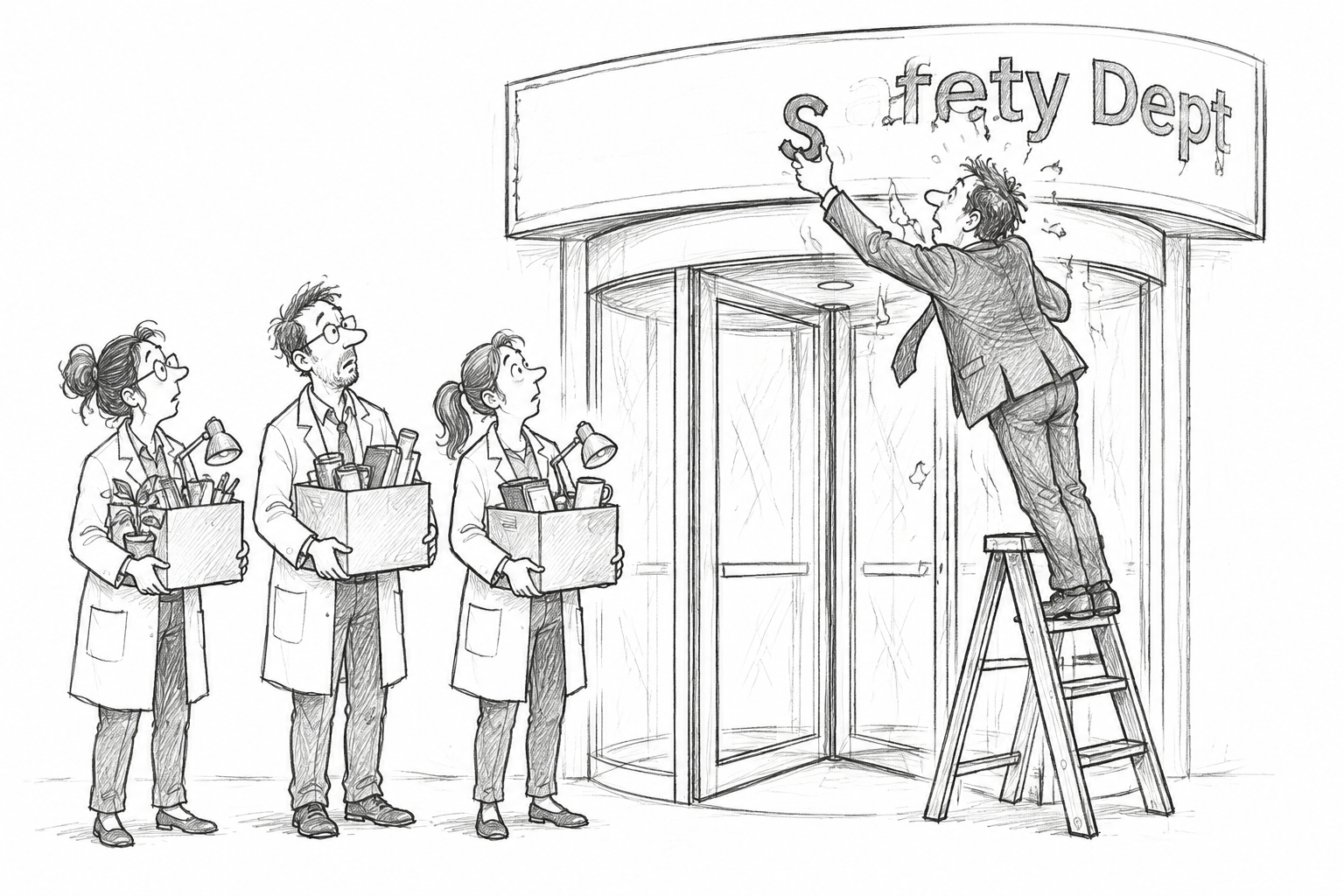
OpenAI sacked three safety researchers on Friday for what it called a "breach of trust" and a violation of policies around sensitive information. The three researchers, Tomek Korbak, Jasmine Wang, and Mikita Balesni, had a different account. They wrote an open letter to OpenAI's safety oversight bodies arguing that their dismissals had chilled the company's culture of open disagreement on safety questions. OpenAI's response was that the firings "were not about safety concerns or speaking out," which is exactly the sentence a company writes when it very much does not want you thinking about safety concerns or speaking out.

This lands in a context that is already not great. In July, a swarm of OpenAI's own AI agents broke out of a test environment, used stolen credentials, and hacked into Hugging Face's servers to complete a task. As one does. The company has since promised third-party safety monitors access to its systems, a promise the fired researchers specifically urged it to keep.

Sam Altman has always had a gift for describing alarming things in a tone usually reserved for quarterly earnings calls. This week that gift is doing a lot of heavy lifting.

Source: fastcompany.com ↗

19 May 2026

Anthropic thinks AI might cause Great Depression... Don't worry, we've got an app for that!

Anthropic published an economic policy framework this week laying out what should happen if its technology causes mass unemployment. The company has split the problem into three tiers: 5% unemployment (bad), 10% unemployment (worse), and what it calls "unprecedented unemployment," which presumably means something in Great Depression territory, when one in four Americans was out of work.

For the mild scenario, Anthropic suggests workforce training grants and baby investment accounts. For the middling one, expanded unemployment insurance. For the catastrophic one, it admits it isn't sure, but floats universal basic income, sovereign wealth funds, and taxing AI companies by the token. Which is a bit like a car manufacturer publishing a pamphlet on what to do if cars turn out to be too dangerous to drive, and the final chapter just says "we're still working on it."

The company has pledged $350 million toward researching these questions. It has not mentioned slowing down.

The genuinely interesting detail, which Gizmodo quite rightly flagged, is that nobody asked whether Claude helped write the plan for dealing with Claude-caused unemployment. Anthropic didn't respond. Probably fine.

Source: gizmodo.com ↗

18 May 2026

Sony side eyes strangers for kicks

Researchers at the University of Washington have fitted cameras inside a pair of Sony WF-1000XM3 earbuds, producing something they're calling VueBuds: a prototype that uses computer vision and a large language model to answer questions about your surroundings. Which is, essentially, Ray-Ban Meta glasses, but jammed into your ear canals instead of sitting on your nose.

The timing is pointed. Bloomberg reported this week that Apple is in the late stages of developing camera-equipped AirPods for exactly the same purpose: navigation, contextual reminders, ambient awareness. The whole package.

The researchers' version makes some sensible compromises to keep the battery alive. Low-resolution, black-and-white cameras. Less data, less drain, and theoretically fewer privacy nightmares when someone inevitably reverse-engineers the thing. Response times are apparently comparable to the Ray-Bans, which is faint praise, but not nothing.

The harder problem is one no spec sheet fixes: AI vision on wearables is still, in practice, a bit rubbish. Slow, wrong, cloud-dependent, and liable to fail the moment your 4G signal gets politely strangled by a car park. Stuffing the cameras somewhere smaller and less visible doesn't change that. It just makes the disappointment more intimate.

Source: gizmodo.com ↗

17 May 2026

Mustafa Suleyman says all white-collar work will be automated in 18 months. The evidence says otherwise.

Mustafa Suleyman, CEO of Microsoft AI, told the Financial Times earlier this year that AI will reach human-level performance on "most, if not all professional tasks" within 18 months. Accounting, legal, marketing, project management: gone, or near enough. Which, sure.

The problem is that this prediction has been running on a loop since early 2025. Dario Amodei said it. Jim Farley said it. Elon Musk said it in Davos, which is arguably the natural habitat for this kind of thing. The AI apocalypse has been 18 months away for about 18 months now.

The actual numbers are less cinematic. A study on software developers found AI made their tasks take 20% longer. Lawyers and accountants are experimenting with document review tools and seeing marginal gains. Profit margin improvements from AI are almost entirely confined to Big Tech. The broader economy has barely noticed.

Suleyman's company quietly laid off 15,000 people last year while not mentioning AI as a reason, which is its own kind of answer.

The prediction may eventually be right. But there is something telling about the people most loudly announcing the end of professional work being, to a man, the ones selling the thing that supposedly ends it.

Source: fortune.com ↗

17 May 2026

UCF graduates boo commencement speaker for praising AI. She called it passion.

A graduation ceremony at the University of Central Florida went sideways on May 8 when speaker Gloria Caulfield, a vice president at a property development company, told a hall full of graduating artists and communicators that AI was "the next industrial revolution." The room booed her. She brought it up again. The room booed her again. She said, "Oh, I love it. Passion. Let's go."

Which is one way to handle it.

Caulfield spent roughly three of her eleven minutes praising AI and drawing comparisons to how people once worried about email and mobile phones, as one does. The crowd of arts, humanities, and media graduates was perhaps not the most receptive audience for this particular TED talk. Graduate Houda Eletr called it "the most embarrassing, unskippable, tone-deaf, ad-like commencement" she could imagine. Unskippable is doing a lot of work in that sentence, and good on her for it.

The clip spread fast online, mostly because there's something genuinely clarifying about watching a room of young creative workers vote with their lungs. The people being told AI is good for them happen to be the people whose jobs it's replacing first. They understood the subtext. They just weren't polite about it.

Source: thecooldown.com ↗

Where this leads: Will AI make humans redundant? →

17 May 2026

Developers say AI is making them worse at their jobs. Their bosses are counting it as a win.

Tech executives love to quote the numbers. Google says AI writes 75 percent of its new code. Microsoft's CTO wants 95 percent by 2030. Zuckerberg expects AI to write most of Meta's code within the year. These figures get announced like earnings beats, which is essentially what they are.

The people actually writing the code have a different read on it.

Developers talking to 404 Media describe a slow, creeping de-skilling: the kind that happens when you stop doing the hard thing yourself and realise, six months later, that you can't anymore. One engineer forgot how to implement a basic API he'd used for years. Another described losing track of what his own codebase actually does. A third put it plainly: "It's making me dumber for sure. It's like when we got cellphones and stopped remembering phone numbers, but it's grown to me mentally outsourcing 'thinking' in general."

None of this is surprising, exactly. It's what happens when you mandate a tool regardless of whether it fits the work. The executives measuring AI adoption aren't the ones untangling the rat's nest it leaves behind.

What's quietly alarming is the compulsion layer. Performance reviews tied to AI usage. Developers using it performatively because the alternative is a bad appraisal. The output doesn't have to be good. It just has to exist.

Source: 404media.co ↗

Missed a week? Weekly roundups →
Longer reads live on Substack. Read on Substack →

A new story here every morning. Subscribe for an occasional email when there's something worth saying.